
OCD Counselling in West Sussex|Understanding Obsessive Compulsive Disorder and How Therapy Can Help








OCD Therapy West Sussex: Compassionate Support for Obsessive Compulsive Disorder
Living with OCD is exhausting. For many people, the mind becomes stuck in a cycle of fear, doubt, and repeated rituals that others cannot see. Although the distress is invisible to those around them, it is real and relentless. At Eleos Counselling, we offer OCD therapy West Sussex clients can turn to when intrusive thoughts, compulsions, reassurance seeking, or avoidance begin to take over daily life.
OCD is often misunderstood. Many people still believe it is simply about cleanliness or being tidy. However, obsessive compulsive disorder is far more painful and disruptive than that stereotype suggests. It can affect work, relationships, sleep, confidence, parenting, and even the ability to make ordinary decisions. Therefore, seeking professional support is not a sign of weakness. Instead, it is often the first step towards feeling safer in your own mind again.
At Eleos Counselling, we provide therapy in a calm, confidential, and compassionate setting. Moreover, our work is grounded in professional practice, human warmth, and genuine respect for the emotional weight that OCD creates. If you are looking for OCD therapy in West Sussex, this page will help you understand the condition, recognise its impact, and see how psychotherapy can support meaningful recovery.
What Is OCD? Understanding Obsessive Compulsive Disorder
Obsessive compulsive disorder, or OCD, is a recognised mental health condition that involves obsessions, compulsions, or both. Obsessions are intrusive thoughts, images, urges, or doubts that cause marked distress. Compulsions are the actions or mental rituals a person feels driven to carry out to reduce anxiety, prevent harm, or create a sense of certainty. However, that relief is usually brief. Consequently, the cycle can return again and again.
For instance, someone may fear contamination, worry they have harmed another person, or become distressed by thoughts that feel disturbing or unacceptable. In response, they may wash, check, repeat, confess, seek reassurance, avoid situations, or perform silent mental rituals. In some cases, these compulsions are visible to others. In many cases, though, they happen internally and remain completely hidden.
Importantly, OCD is not a personality flaw, and it is not simply about being tidy, controlling, or perfectionistic. Rather, it is often fuelled by fear, shame, inflated responsibility, and a deep need for certainty. Unfortunately, certainty rarely lasts for long. Therefore, many people with OCD feel worn down by a struggle they fight in silence each day. According to the International OCD Foundation, OCD affects around one in every 100 adults.
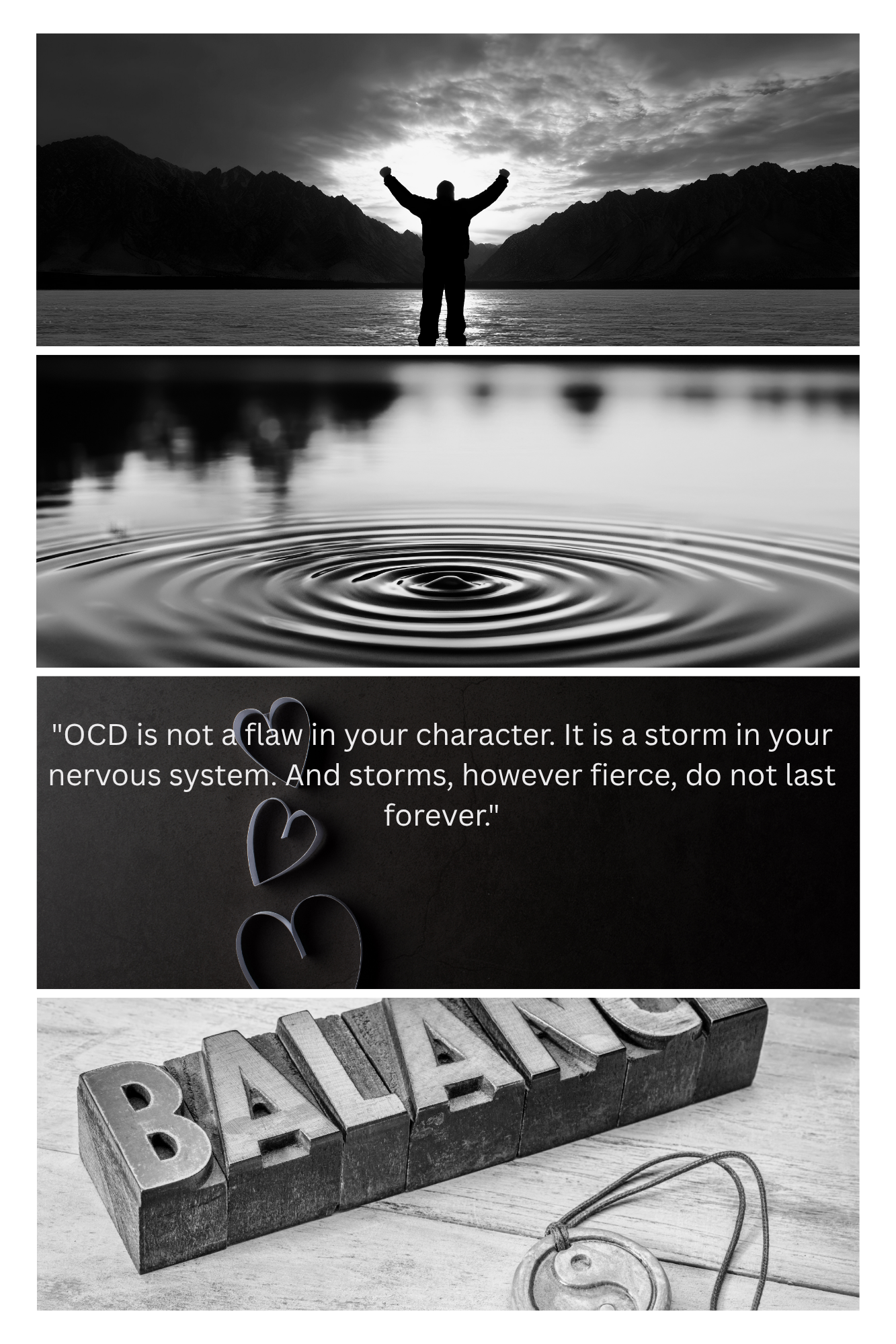
How OCD Can Feel From the Inside
OCD is not only disruptive — it can also be deeply frightening. Many people describe it as feeling trapped in a prison of doubt. One thought appears, another quickly follows, and before long the mind is scanning for danger everywhere. Consequently, daily life can start to revolve around trying to prevent catastrophe, prove innocence, or gain reassurance that everything is alright.
This inner struggle creates enormous shame. A person may know that their fear does not fully make sense, yet still feel unable to let it go. That conflict is one of the cruelest parts of OCD. There may be real insight on one hand, and still intense anxiety on the other. Therefore, people often hide symptoms for months or even years before asking for help.
In addition, OCD can leave people feeling profoundly alone. They may fear being misunderstood, judged, or seen as irrational. Worrying that disclosing their thoughts will lead others to think badly of them is also very common. However, intrusive thoughts are a well-documented feature of OCD, and experiencing them does not mean someone wants to act on them. OCD therapy West Sussex clients access at Eleos Counselling provides a safe place to speak openly, reduce shame, and begin making sense of what has felt so overwhelming.

Common Signs of OCD
OCD can present in many different ways. Although every person’s experience is unique, some common signs include:
- Repeated checking of locks, doors, appliances, messages, or memories
- Washing, cleaning, or contamination fears
- Intrusive thoughts about harm, sex, religion, morality, or aggression
- Reassurance seeking from partners, family, friends, or professionals
- Mental reviewing, counting, neutralising, or repeating phrases internally
- Fear of making mistakes or causing harm through carelessness
- Avoidance of people, places, objects, or situations that trigger anxiety
- Confessing, apologising, or seeking certainty again and again
- Needing things to feel “just right” before moving on
- Persistent doubt that interferes with decisions, concentration, or rest
Sometimes OCD is loud and visible. At other times, it becomes hidden and entirely internal. For that reason, many people suffer for a long time before recognising that what they are experiencing is obsessive compulsive disorder — and that effective support is available through OCD therapy in West Sussex.
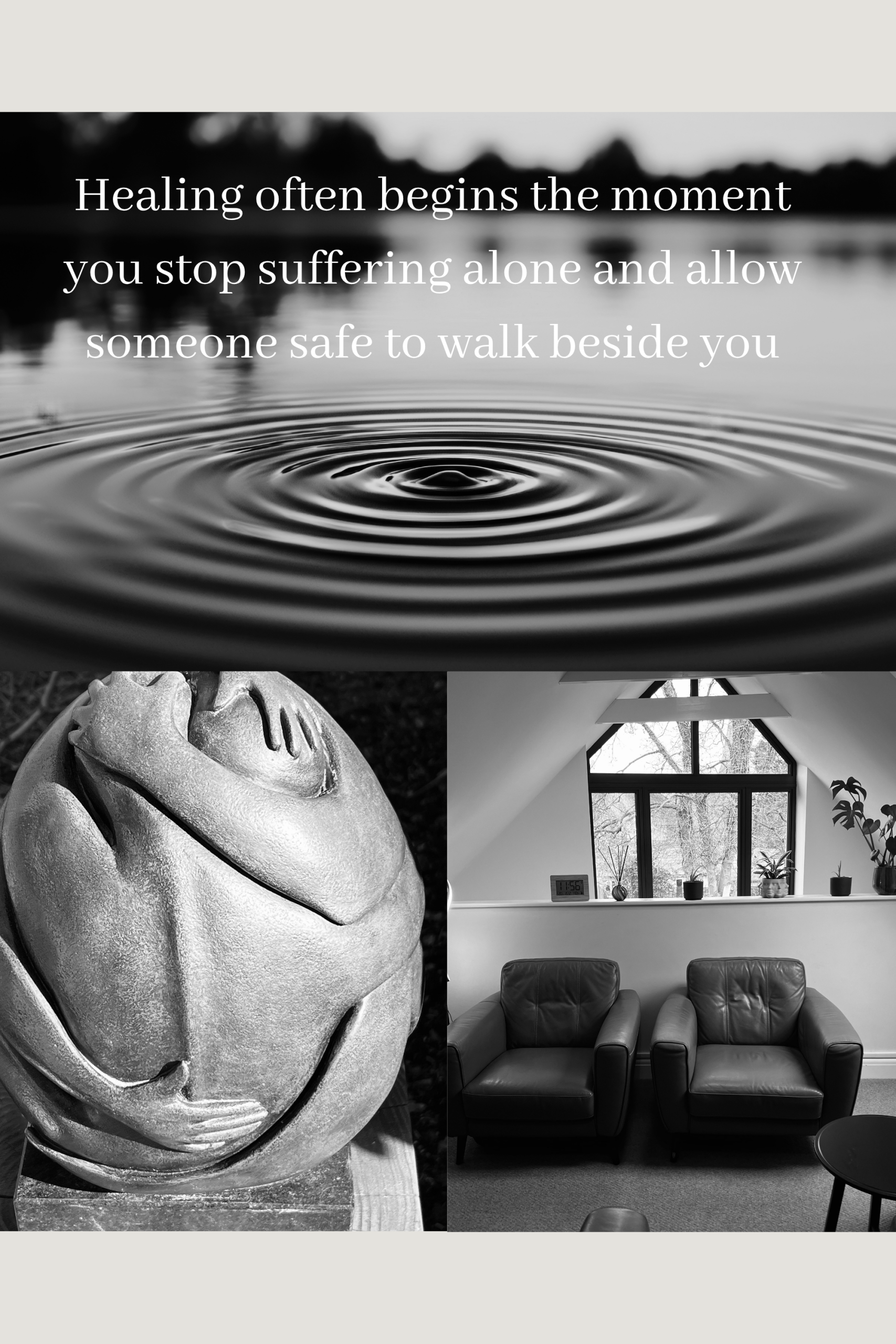
What Are the Common Types of OCD?
OCD can centre around many different themes. Even so, the underlying pattern is usually similar. An intrusive fear appears. Anxiety rises. The person tries to reduce distress through checking, avoiding, or seeking reassurance.
Common themes include:
- contamination OCD
- checking OCD
- harm OCD
- relationship OCD
- sexual intrusive thoughts
- religious or scrupulosity OCD
- health-related OCD
- moral OCD
- symmetry or “just right” OCD
- mainly obsessional OCD — where compulsions are mental rather than visible
What the Thoughts Feel Like
Some people fear they may cause harm. Others worry they are secretly dangerous, immoral, or unfaithful. In many cases, the distress is not just about the thought itself. It is about what the person believes the thought reveals about them.
In reality, intrusive thoughts are not intentions, confessions, or character verdicts. They are a feature of OCD — not a reflection of who you are.

What Causes OCD?
There is no single cause of OCD. It is usually shaped by a combination of factors. No two people experience it in exactly the same way.
Common underlying features include:
- anxiety sensitivity
- perfectionism
- heightened sense of responsibility
- intolerance of uncertainty
- shame and self-criticism
- stressful or significant life experiences
- trauma or adversity
- family history of anxiety
The Role of Uncertainty
OCD often feeds on the belief that uncertainty is unbearable. Yet life is never fully certain. Recovery is therefore not about proving every fear wrong. More often, it involves building a different relationship with uncertainty and discomfort.
The Role of Perfectionism
Perfectionism gives OCD fertile ground. When a person feels they must be completely certain or morally correct at all times, ordinary doubt becomes intolerable. Therapy can help gently loosen that grip.
How OCD Disrupts Daily Life, Work, and Relationships
OCD does not stay neatly contained. Instead, it tends to spill into ordinary routines and slowly narrows a person’s world. Leaving the house may take far longer than it should. Concentration at work becomes harder because doubt interrupts it constantly. Travel may feel stressful if checking rituals or contamination fears are triggered. Likewise, relationships can become strained when reassurance seeking or avoidance patterns grow stronger over time.
When Confidence Begins to Erode
Over time, self-trust also erodes. A person may begin to doubt their memory, judgment, or moral character. As a result, simple daily actions can start to feel loaded with threat. Sending an email, touching a surface, walking past someone, or making a small decision may all become mentally exhausting. This is one reason why OCD therapy West Sussex clients seek at Eleos Counselling is not just about reducing symptoms. It is equally about restoring daily functioning, emotional stability, and genuine self-trust.
Furthermore, OCD commonly affects sleep, mood, and physical tension. When the nervous system is continually activated by fear, the body often pays a significant price as well. Chronic exhaustion, irritability, and low mood are all frequent companions of long-term OCD. Therefore, effective therapy needs to address not only the OCD cycle itself, but also the emotional and physical toll of living under persistent strain. The NICE guidelines for OCD (CG31) recognise this broader impact and recommend psychological therapy as a primary treatment.
The Emotional Cost of Living With OCD
OCD is frequently accompanied by anxiety, but that is not the whole picture. Many people also experience guilt, shame, disgust, frustration, hopelessness, and deep emotional exhaustion. Feeling embarrassed by the content of intrusive thoughts, or ashamed of how much time rituals consume, is extremely common. Consequently, people often become self-critical and increasingly isolated from those they care about most.
In some cases, OCD may sit alongside depression, trauma history, perfectionism, or chronic stress. If someone has learned early in life that mistakes are dangerous or that responsibility must be carried alone, OCD can become entangled with deeper emotional patterns. Therefore, sensitive psychotherapy can be particularly valuable. Rather than focusing only on behaviour, it helps people understand what the OCD may be organised around emotionally — and that is often where lasting change begins.
At Eleos Counselling, we take that emotional burden seriously. We understand that people coming for OCD therapy in West Sussex are not merely trying to stop symptoms. More often, they want real relief, greater clarity, and the chance to live without constant fear dominating their inner world. Therapy can support that process gently, thoughtfully, and at a pace that feels manageable.
How OCD Therapy Works: Our Approach at Eleos Counselling
Therapy for OCD can help by creating a space where the cycle is understood rather than judged. First, we work together to clarify what is actually happening. That often means identifying obsessions, compulsions, triggers, avoidance patterns, reassurance seeking, and the beliefs that keep the cycle alive. Once these patterns become clearer, many people feel considerably less frightened by them — because understanding something meaningfully reduces its power.
Learning to Respond Differently
Next, therapy can help a person begin responding differently to intrusive thoughts and anxiety. Instead of treating every thought as urgent or meaningful, the work often involves building tolerance for uncertainty and reducing the immediate need to neutralise distress. Although this can feel difficult at first, it is precisely where genuine change begins. In time, many people find that intrusive thoughts lose much of their power when they are no longer automatically obeyed.
Psychotherapy may also help with the deeper emotional themes that surround OCD — such as shame, inflated responsibility, fear of harm, or harsh self-criticism. Moreover, if trauma, relational wounds, or chronic stress sit beneath the OCD presentation, these may also need thoughtful and careful exploration. At Eleos Counselling, our approach is compassionate, trauma-informed, and grounded in careful listening. Rather than treating people as a set of symptoms, we aim to understand the whole person. The National Institute of Mental Health confirms that psychological therapy is one of the most effective treatments available for OCD.
OCD Themes We May Explore in West Sussex Therapy Sessions
OCD can attach itself to many different fears and subjects. Because of that, OCD therapy West Sussex at Eleos Counselling is always tailored to the individual rather than formulaic. Depending on your experience, sessions may explore some of the following themes.
Contamination and Washing Fears
Some people feel persistently unsafe around dirt, germs, bodily fluids, or certain environments. Consequently, washing, cleaning, or avoidance can become intense and time-consuming, affecting daily functioning significantly.
Checking and Doubt
Others become trapped in repeated checking of locks, appliances, messages, or memories. Although checking may bring brief relief, the doubt usually returns quickly — often requiring even more checking than before.
Harm OCD
A person may fear causing harm accidentally, or may struggle with violent intrusive thoughts. These thoughts are typically ego-dystonic, meaning they feel deeply unwanted and disturbing rather than desired.
Relationship OCD
OCD can target intimate relationships, creating persistent doubt about feelings, attraction, loyalty, or whether one is with the right partner. This can cause enormous pain for both people involved.
Moral or Scrupulosity OCD
Some clients struggle with guilt, morality, sin, honesty, or a persistent fear of being a bad person. As a result, confession, reassurance seeking, and mental reviewing may all become compulsive and exhausting.
“Just Right” Feelings and Perfectionism
For some people, the issue is not catastrophe but an unbearable internal discomfort. Something feels off or incomplete until a task is repeated or corrected in exactly the right way. Although this may appear minor from the outside, it can consume significant time and energy.
Whatever form OCD takes, the pattern can become exhausting and life-limiting. However, therapy can help create meaningful distance from the cycle — and more genuine room for choice and peace of mind.
Why Early OCD Therapy in West Sussex Makes a Real Difference
The longer OCD continues without support, the more entrenched it tends to become. Rituals expand, avoidance spreads, and confidence shrinks gradually. Therefore, early OCD therapy in West Sussex can make a genuine and significant difference to long-term outcomes. That does not mean someone has failed if they have lived with OCD for many years. It simply means that getting help sooner reduces unnecessary suffering and helps prevent patterns from becoming more deeply embedded.
Equally, people do not need to wait until life falls apart before reaching out. Many clients contact Eleos Counselling when they notice that the mental effort of coping is becoming too great, and that is a wise step. Furthermore, early support can also protect relationships. Families and partners are often drawn into reassurance cycles without fully understanding what is happening. With professional help, it becomes easier to recognise these patterns and respond in a more genuinely helpful way. The Mayo Clinic notes that treatment outcomes for OCD improve significantly when support is sought early.
Seeking OCD Therapy in West Sussex: What to Expect at Eleos Counselling
If you are searching for OCD therapy West Sussex, you may already know how tiring it is to live with constant doubt, fear, and internal pressure. You may also be wondering whether things can really change. Although recovery is rarely instant, meaningful improvement is genuinely possible. With the right support, what currently feels unmanageable can become more understandable, more workable, and far less dominant in daily life.
At Eleos Counselling, we offer a calm and compassionate space to begin that process. Whether your OCD shows up through checking, intrusive thoughts, contamination fears, mental rituals, avoidance, or relentless reassurance seeking, OCD therapy in West Sussex can help you make sense of the pattern and start responding differently. Importantly, you do not have to explain everything perfectly before reaching out. Many people arrive feeling confused, ashamed, or unsure of where to begin, and that is completely understandable.
Reaching out for help can feel exposing. Nevertheless, it can also be the beginning of genuine relief. If OCD is interrupting daily life, relationships, work, confidence, or peace of mind, compassionate and professional support is available here in West Sussex.
Online Counselling for OCD
Online counselling for OCD can give you a safe and private space to talk about intrusive thoughts, anxiety, compulsions, and doubt. For many people, OCD can feel exhausting. It can affect daily life, relationships, work, and confidence.
At Eleos Counselling, online counselling for OCD offers compassionate support in a calm and confidential setting. Therapy can help you understand the patterns behind checking, reassurance-seeking, mental rituals, and avoidance. In turn, this can help you feel less trapped by the cycle of OCD.
Online sessions are also flexible and convenient. You can attend therapy from home, which may make it easier to access regular support. If you are looking for online counselling for OCD, Eleos Counselling offers a thoughtful and professional space to begin.
“About Your Therapist”
 Tony Larkin FDA, BA (Hons), MBACP (Accredited) Psychotherapist and Counsellor | Founder of Eleos Counselling | Billingshurst, West Sussex
Tony Larkin is an Accredited Member of the British Association for Counselling and Psychotherapy (BACP) — a status that reflects not just qualification but a sustained commitment to professional standards, ongoing development, and ethical practice. With over 15,000 hours of clinical experience, Tony brings a depth of understanding to his work that only comes from years of sitting with people through some of the most difficult moments of their lives.
As the founder of Eleos Counselling, Tony offers a space that is calm, informed, and genuinely non-judgemental. He works with a range of presentations including OCD, anxiety, trauma, addiction, perfectionism, and men’s mental health — drawing on a self-compassion informed approach alongside psychoeducation about the patterns that keep distress going.
Tony’s therapeutic work is integrative by nature. Alongside his core psychotherapeutic approach, he has training in EMDR — Eye Movement Desensitisation and Reprocessing — a therapy with a strong evidence base primarily in trauma and PTSD. Whilst EMDR is not currently a NICE-approved treatment for OCD specifically, some practitioners are exploring its potential role as a complementary strand of support, particularly where trauma and OCD intersect. Tony approaches this area with the same care and transparency he brings to all of his work.
If you are wondering whether therapy with Tony might be right for you, the most important thing to know is this: you do not need to arrive with the right words or a clear explanation. You simply need to be willing to begin.


Frequently Asked Questions About OCD
Is OCD just about cleanliness?
No. Although contamination fears are common, OCD can also centre on harm, relationships, sexual intrusive thoughts, religion, checking, health fears, and a need for certainty.
Can therapy really help with OCD?
Yes. Many people find that understanding the cycle and changing their response to it can reduce its impact over time.
Does having intrusive thoughts mean I want to act on them?
Not necessarily. In OCD, intrusive thoughts are often unwanted, distressing, and inconsistent with a person’s values and sense of self.
Can OCD be hidden?
Yes. Some compulsions are mental rather than visible. A person may be silently reviewing, neutralising, mentally checking, or seeking reassurance without others realising.
Do I need medication?
Not always. Some people have therapy alone, while others with more severe OCD may benefit from therapy combined with medication.
Take the First Step
If OCD is narrowing your life, therapy can be a place to begin loosening its grip.
At Eleos Counselling, we offer compassionate support for people living with obsessive compulsive disorder, intrusive thoughts, anxiety, shame, and the exhausting search for certainty. With the right support, it is possible to understand the cycle more clearly and begin moving towards greater freedom.
Eleos Counselling
Little East Street, Billingshurst, RH14 9NP
Phone: 01403 900079
Mobile: 07854 602050
Email: info@eleoscounselling.com
Website: www.eleoscounselling.co.uk
OCD Support Organisations and Resources
OCD-UK The UK’s leading charity run by and for people with OCD. OCD-UK provides detailed information on OCD types, symptoms, treatment options, and how to find professional support. www.ocduk.org
OCD Action One of the UK’s largest OCD charities, offering a helpline, online support groups, and resources for people living with OCD and their families. www.ocdaction.org.uk
Mind A leading national mental health charity providing clear and accessible information on OCD including symptoms, self-care, and treatment options. www.mind.org.uk/information-support/types-of-mental-health-problems/obsessive-compulsive-disorder-ocd
NICE — OCD Treatment Guidelines The National Institute for Health and Care Excellence provides the clinical guidelines that inform how OCD is treated and managed across professional practice in the United Kingdom.www.nice.org.uk/guidance/cg31
BACP — What Therapy Can Help With: OCD The British Association for Counselling and Psychotherapy provides guidance on how talking therapy can help people living with OCD and how to find an accredited therapist.www.bacp.co.uk/about-therapy/what-therapy-can-help-with/ocd
Samaritans Available 24 hours a day, seven days a week, Samaritans provide confidential emotional support to anyone in distress or struggling to cope. www.samaritans.org — Phone: 116 123
Disclaimer
The organisations listed above are provided for information and signposting purposes only. Eleos Counselling is not affiliated with, endorsed by, or responsible for the content, availability, accuracy, or services offered by any external organisation or third-party website listed here. Inclusion on this list does not constitute a recommendation of any specific service, treatment, or approach.
Links are provided in good faith and were accurate at the time of publication. Eleos Counselling cannot guarantee that external websites remain active or up to date. Visitors are encouraged to verify information directly with the relevant organisation.
If you are in immediate danger or experiencing a mental health crisis, please call 999 or contact NHS 111.
References
British Association for Counselling and Psychotherapy. (n.d.). OCD | What therapy can help with. BACP. Retrieved March 31, 2026, from https://www.bacp.co.uk/about-therapy/what-therapy-can-help-with/ocd/
National Health Service. (n.d.). Obsessive compulsive disorder (OCD). NHS. Retrieved March 31, 2026, from https://www.nhs.uk/mental-health/conditions/obsessive-compulsive-disorder-ocd/
National Health Service. (n.d.). Symptoms – Obsessive compulsive disorder (OCD). NHS. Retrieved March 31, 2026, from https://www.nhs.uk/mental-health/conditions/obsessive-compulsive-disorder-ocd/symptoms/
National Health Service. (n.d.). Treatment – Obsessive compulsive disorder (OCD). NHS. Retrieved March 31, 2026, from https://www.nhs.uk/mental-health/conditions/obsessive-compulsive-disorder-ocd/treatment/
National Institute for Health and Care Excellence. (2024). Obsessive-compulsive disorder and body dysmorphic disorder: Treatment (CG31). NICE. https://www.nice.org.uk/guidance/cg31
OCD Action. (n.d.). Learn about OCD. OCD Action. Retrieved March 31, 2026, from https://ocdaction.org.uk/learn-about-ocd/
OCD Action. (n.d.). Obsessive-compulsive disorder (OCD). OCD Action. Retrieved March 31, 2026, from https://ocdaction.org.uk/resources/ocd/
Tony Larkin FDA,BA (Hons) MBACP (Acc)
Disclaimer: The organisations listed below are provided for information and additional support only. Eleos Counselling is not affiliated with, endorsed by, or responsible for the content, availability, or services offered by external organisations or third-party websites.
I’m Tony Larkin, a qualified psychotherapist and counsellor based in West Sussex. As the founder of Eleos Counselling, I provide a safe, supportive space for people facing challenges such as anxiety, addiction, perfectionism, trauma, and relationship difficulties. With years of experience, I combine professional knowledge with compassion, helping clients find new perspectives, rediscover confidence, and build healthier connections. My approach is rooted in empathy and the belief that lasting change comes through understanding, self-compassion, and support
Stay In Touch
Office
Eleos Counselling Ltd The Workshop, Little East Street, Billingshurst, West Sussex RH14 9NP
Phone Number
01403 900097